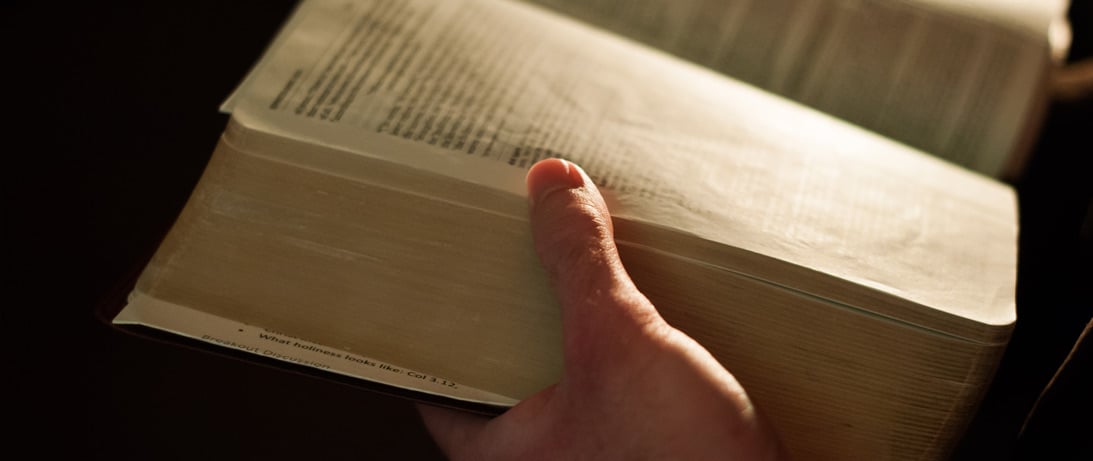
As we begin a journey over the next nine weeks into what the Bible tells us about where we are going, we start by understanding the start.
Last week we explored how things were good in the Beginning. But, just because they were good, why should we think there is good ahead for us?
How can our lives, as insignificant as they seem, have purpose?
God saves His people and prepares them for something big for His Kingdom.
What happens when our sense of plans and purpose donR17;t seem to be where God is headed?
Every lie, every broken relationship, every disease, every death—Genesis 3 is where it all traces back, and calling it “the fall̶1; doesnR17;t come close to doing it justice. What went wrong in that garden wasnR17;t just a mistake; it was a cosmic tragedy, and the question God asks in the wreckage of it has a way of landing personally.
What happens when following God leads straight into a desert? In Genesis 12 and 15, Abraham reaches the promised land only to face famine, barrenness, and the apparent impossibility of becoming a great nation. Then God takes him beneath the night sky, where countless stars frame the tension between present circumstances and a promise that seems beyond reach.
We come to the Bible hungry for a fix—something for our problems, our inner turmoil, our next step. Genesis 1 and 2 refuse to make us the point. The story opens with four words that name the main character, and it isn’t you.
Jim Wolfe traces GodR17;s redemptive plan through four Old Testament “roadside attractions̶1; that foreshadow Christ R12; skins, boxes, baskets, and snakes. Along that scenic route, we arrive at the true meaning of Christmas, an attraction we actually need.
YouR17;ve said it in the middle of the pain: there has to be more to this life than this. Israel lived that distance in Egypt—promised milk and honey yet making bricks from dawn to night, their cries seemingly unheard. Exodus 1–15 traces that groan toward a sea no one can part alone, and asks who can carry a captive people across it.